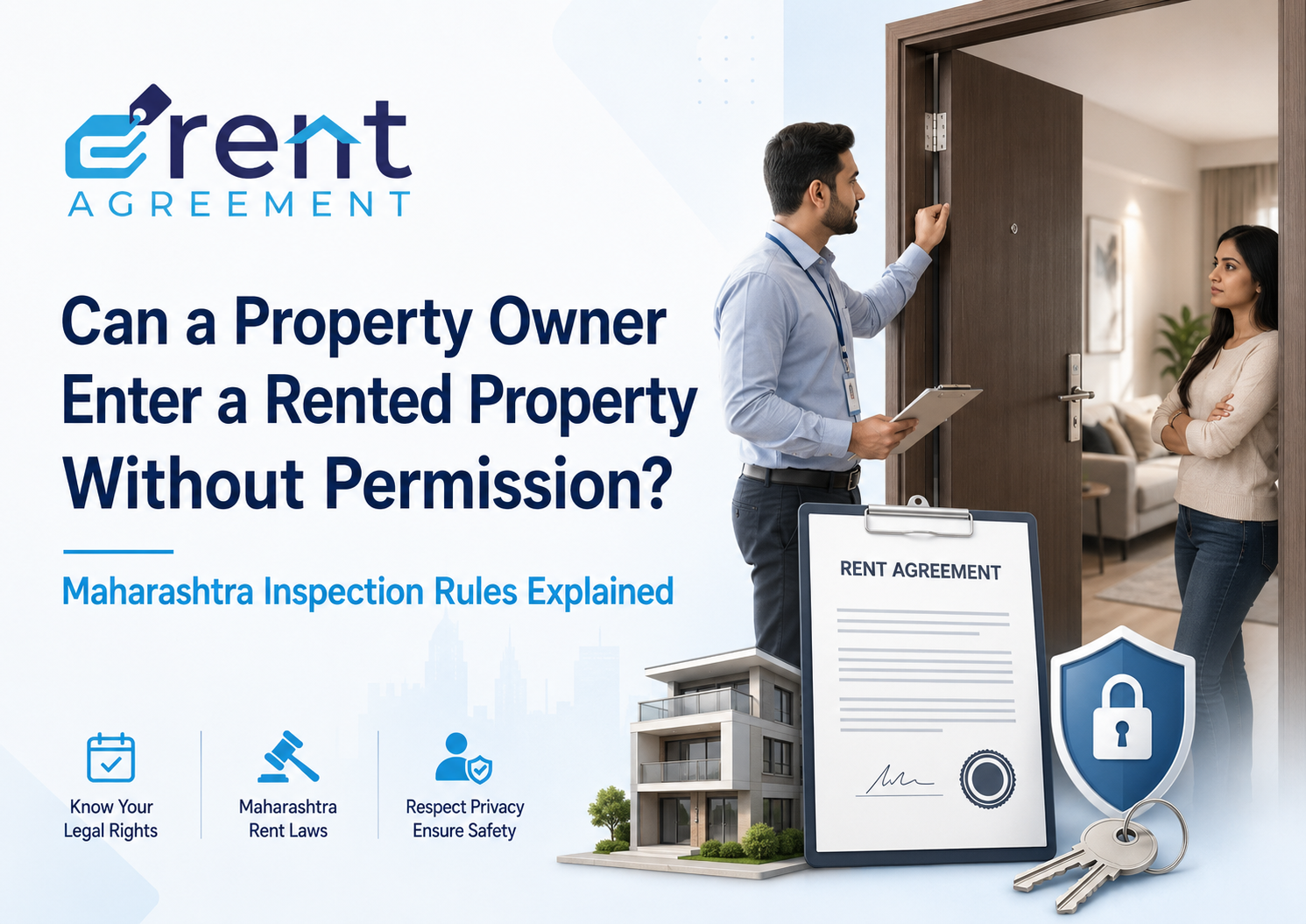
Can a Property Owner Enter a Rented Property Whenever They Want?
You own the property.
But once you have handed over possession to a tenant or licensee, can you simply arrive and enter whenever you wish?
No. Ownership does not mean unrestricted inspection at any time.
Section 28 of the Maharashtra Rent Control Act, 1999 specifically provides that a landlord is entitled to inspect premises that have been let or given on licence at a reasonable time after giving prior notice to the tenant, licensee or occupier.
That means two principles are particularly important:
Prior notice + reasonable timing.
A professionally drafted Registered Leave & License Agreement should also make the inspection procedure clear so that both Owner and Tenant know exactly what to expect.
What Does Section 28 of the Maharashtra Rent Control Act Say?
Section 28 is surprisingly short but important.
It gives the landlord a right to inspect the property, but that right is subject to conditions. The inspection should take place at a reasonable time, and the tenant, licensee or occupier should receive prior notice.
Therefore, the practical interpretation should not be:
“It is my property, so I can enter whenever I want.”
Instead, a better approach is:
“It is my property, and I have a right to inspect it, but I should notify the occupant and arrange the visit at a reasonable time.”
This creates a much healthier owner–tenant relationship.
Why Would an Owner Need to Inspect the Property?
There are many legitimate reasons why a property owner may need to inspect a rented property.
An owner may want to check the condition of the property, investigate a reported leak, assess repairs, inspect furnished items, verify serious maintenance issues, arrange necessary servicing or examine the premises before the tenancy is due to end.
The important issue is not simply why an inspection is required.
It is also how the inspection is conducted.
Prior communication significantly reduces unnecessary disputes.
How Much Prior Notice Must an Owner Give?
Section 28 uses the expression “prior notice”, but the provision itself does not prescribe a universal number of hours or days for every inspection.
This is exactly why the Registered Leave & License Agreement can be useful.
Owner and Tenant can mutually define a practical inspection process in advance.
For example, the agreement may provide that, except where circumstances genuinely require urgent attention, inspections will be scheduled after advance communication and at a mutually convenient or reasonable time.
The exact wording should reflect the arrangement agreed between the parties rather than copying a generic clause that does not suit the property.
Can the Tenant Refuse Every Inspection?
A tenant or licensee should not assume that an owner has no inspection rights at all.
Section 28 expressly gives the landlord a right to inspect, provided the statutory conditions regarding prior notice and reasonable timing are followed.
At the same time, the owner's right should not be interpreted as permission to repeatedly arrive without warning or unnecessarily disturb the occupant.
Good communication protects both sides.
Can the Owner Keep a Duplicate Key?
Many owners retain a duplicate key for practical or emergency purposes.
However, possession of a duplicate key should not be treated as automatic permission to conduct ordinary inspections without notice.
If the parties want the owner to retain an emergency key, it is sensible to clearly document:
- why the duplicate key is being retained;
- when it may be used;
- how the tenant will be informed; and
- what happens when the tenancy ends.
Clear documentation avoids misunderstandings about access to the premises.
What About Emergency Situations?
A burst water pipe, fire risk, electrical emergency or another serious threat may require immediate action.
These situations should not be confused with a routine property inspection.
Where possible, the owner, tenant, housing society and relevant emergency or maintenance personnel should communicate quickly and create a record of what happened.
For unusual or disputed circumstances, the parties should obtain appropriate professional advice instead of relying on assumptions about access rights.
Why an Inspection Clause Should Be in the Rent Agreement
Imagine an Owner expects to inspect the flat every few months.
The Tenant believes the Owner should never visit during the entire agreement tenure.
Neither expectation was discussed before possession.
That is how avoidable disputes begin.
A clear inspection clause can establish the purpose of inspections, communication method, expected advance notice, reasonable visiting hours, arrangements when the occupant is unavailable and procedures for genuine emergencies.
The clause should balance the owner's legitimate interest in protecting the property with the occupant's right to peacefully use the premises according to the agreed terms.
Property Inspection Does Not Mean Constant Monitoring
A legitimate inspection right should not become continuous monitoring of how somebody lives inside the property.
For example, an Owner may reasonably need to check whether a major leak has damaged the flat.
That is very different from repeatedly visiting simply to see what the tenant is doing.
The purpose, frequency and manner of inspection should be reasonable and connected with the property or tenancy.
Owners: Document the Property Before Possession
The best property inspection often happens before the tenant moves in.
Take photographs or videos showing the condition of the flat and retain them with your tenancy records.
Pay particular attention to walls, flooring, bathrooms, kitchen, doors, windows, furniture, appliances, plumbing fixtures, electrical fittings, existing damage and meter readings.
A joint move-in record can later make inspections and security-deposit settlement much easier.
Furnished Property? Inspection Becomes Even More Important
For furnished or semi-furnished properties, the owner may have substantial assets inside the flat.
Instead of relying on memory, attach a detailed inventory to the agreement.
If the property includes air conditioners, refrigerator, washing machine, television, beds, wardrobes, sofa, dining furniture, geysers or other appliances, record their condition at possession.
Then if an inspection takes place later, both sides have a clear starting reference.
Should an Owner Take Photographs During an Inspection?
If photographs are required to document a maintenance issue or property damage, transparency is advisable.
Tell the occupant what is being documented and keep photography relevant to the property issue.
Avoid unnecessarily photographing private belongings or unrelated personal areas.
The objective should be documentation of the property—not intrusion into the occupant's personal life.
What If the Owner Wants to Show the Property to a New Tenant?
This situation commonly arises near the end of the agreement.
The existing occupant may still be living in the property while the Owner wants prospective tenants or purchasers to visit.
This should ideally be addressed in the agreement itself.
The clause can specify that visits must be arranged in advance and during reasonable hours, especially toward the end of the agreement tenure.
This prevents the current tenant from receiving unexpected visitors while also allowing the owner to prepare for the next occupancy.
Can Inspection Terms Be Customized?
Yes. The inspection clause should reflect the actual arrangement between the parties, provided the agreement remains consistent with applicable law.
For example, one Owner may live abroad and only require inspection when a repair issue arises.
Another Owner may have a fully furnished premium apartment and want a mutually agreed periodic condition check.
Those situations are different.
The agreement should reflect the real requirements of the property rather than using vague wording such as:
“Owner may inspect property anytime.”
Such broad wording can create unnecessary friction.
Why a Registered Agreement Matters
Section 55 of the Maharashtra Rent Control Act provides that an agreement for leave and licence or letting of premises covered by the provision must be in writing and registered under the Registration Act, 1908. The section also places responsibility for getting the agreement registered on the landlord.
The Maharashtra Department of Registration & Stamps currently provides an official Leave and License 2.0 online registration facility for Leave & License documentation.
This makes the draft stage especially important.
Before registration, check whether your agreement properly addresses matters such as inspection, maintenance, notice period, deposit refund, parking, furniture, repairs and possession.
A Practical Inspection Clause Should Answer These Questions
- How will the Owner request an inspection?
- How much advance communication is expected?
- What is considered a reasonable inspection time?
- Does the Tenant need to be present?
- How will repair-related visits be handled?
- What happens in a genuine emergency?
- Can prospective tenants visit near the end of the agreement?
- How will furnished items be inspected?
- Who may accompany the Owner?
- How will access be handled if the Tenant is temporarily out of station?
Getting these questions answered before signing is much easier than arguing about them later.
Frequently Asked Questions
Can my landlord enter my flat without informing me in Maharashtra?
For an ordinary inspection, Section 28 states that the landlord's inspection right is exercised at a reasonable time after giving prior notice to the tenant, licensee or occupier.
Does the landlord have a right to inspect the property?
Yes. Section 28 expressly recognises the landlord's right to inspect premises let or given on licence, subject to prior notice and reasonable timing.
Is 24-hour notice compulsory?
Section 28 itself does not state a universal 24-hour requirement. It requires prior notice and inspection at a reasonable time. Parties can define a clearer practical procedure in their agreement.
Can an Owner inspect a furnished flat?
An Owner can have legitimate reasons to inspect the condition of the property and furnished items, but the inspection should follow the applicable statutory and contractual requirements.
Can a Tenant completely stop the Owner from inspecting the flat?
Section 28 recognises a landlord's inspection right, subject to the conditions stated in the provision.
Should an inspection clause be added to a Registered Rent Agreement?
It is a useful clause because it establishes expectations regarding notice, timing and access before a dispute occurs.
Is a Leave & License Agreement required to be registered in Maharashtra?
Section 55 states that covered Leave & License or letting agreements must be in writing and registered, and places responsibility for registration on the landlord.
How erentagreement.com Helps
With erentagreement.com, Owners and Tenants can prepare a Registered Leave & License Agreement reflecting the terms they have mutually agreed.
Our services include Registered Leave & License Agreements, customised clauses, draft review before registration, Doorstep Biometric Service*, government registration assistance, police intimation assistance where applicable, and NRI/outstation coordination.
🎁 FREE Virtual Consultation with a Practising Advocate worth ₹599 during the agreement tenure*
💰 Service Fee from ₹999*
📞 Call / WhatsApp: 7378861163
🌐 www.erentagreement.com
Final Takeaway
The property may belong to the Owner, but that does not mean ordinary inspections should happen without communication.
Maharashtra law gives landlords an inspection right while specifically requiring prior notice and reasonable timing.
For Owners, the lesson is simple: inform before you inspect.
For Tenants, the lesson is equally important: reasonable inspection is not automatically prohibited.
The best solution is to discuss the inspection procedure before possession and clearly document it in the Registered Leave & License Agreement.
Clear access rules. Better privacy. Better property protection. Fewer disputes.
Disclaimer: This article is for general informational purposes and does not constitute legal advice. Individual circumstances and contractual terms can affect the legal position. Obtain professional advice for a specific dispute.

 +91-7378861163
  info@erentagreement.com
  8:00AM - 9:00PM